Furnace Ignition Problems: Why They Happen and How to Fix Them
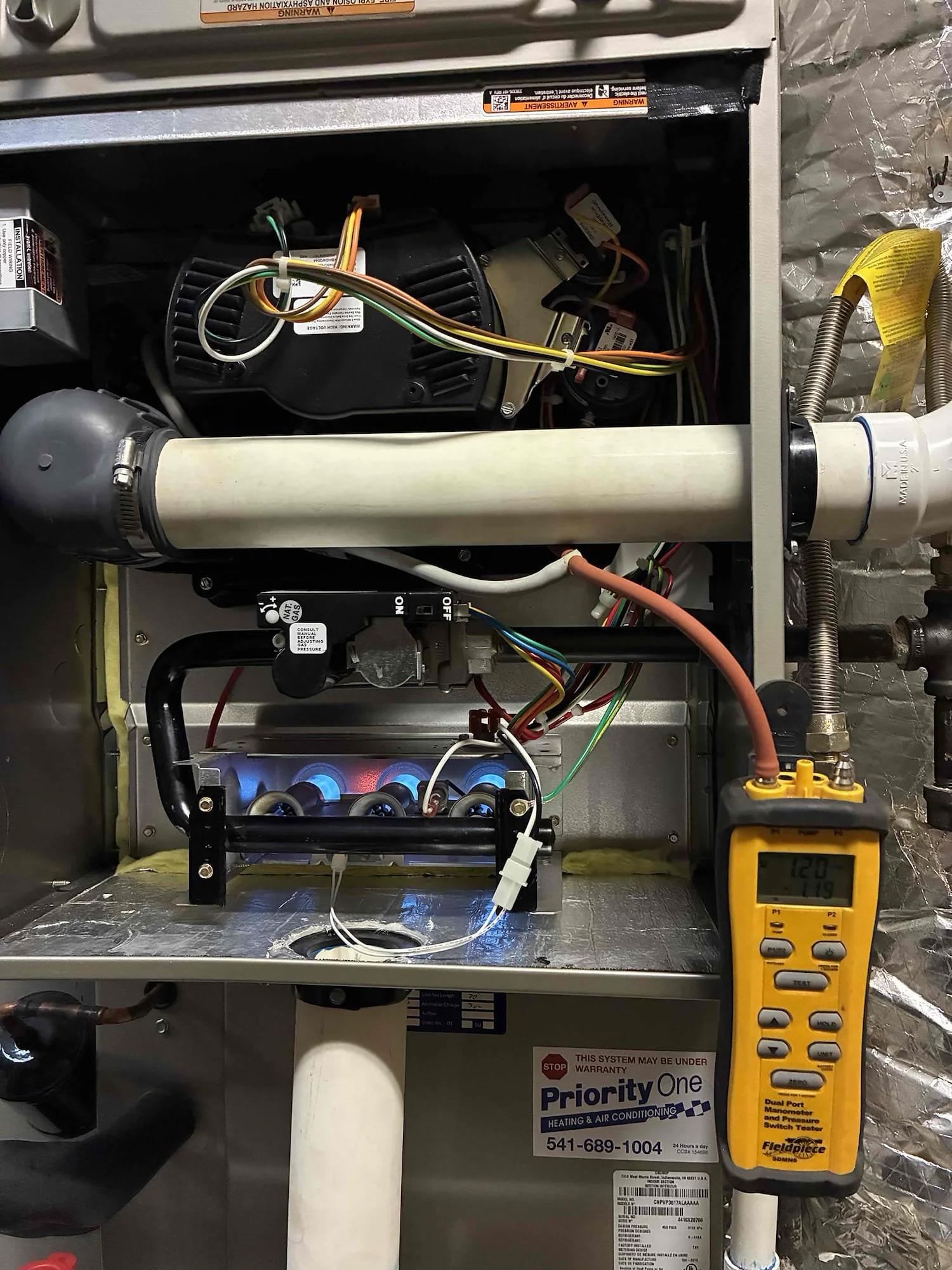
From gas supply issues to furnace flame sensor problems, several common problems can prevent furnace ignition. A furnace that starts but never heats can leave your home without heat on a cold Lane County night. By reaching out to Priority One Heating & Air Conditioning, you can get help diagnosing your ignition-related issues. So, why does my igniter keep burning out? To learn more about common furnace ignition problems and solutions, read on.
What Is a Furnace Igniter and How Does It Work?
In a typical modern gas furnace with hot-surface ignition, the thermostat calls for heat, and the control board starts the draft inducer motor. Once the required safety conditions are verified, the igniter heats up, the gas valve opens, and the burners ignite. The flame sensor then confirms flame presence so the furnace can continue operating safely. Then, the flame sensor confirms that the flame is present. If it can’t confirm the flame, it triggers a safety shutdown to prevent the release of gas.
While a hot surface igniter uses a glowing element to light the gas, spark ignition systems generate a high-voltage electrical spark across an electrode gap to ignite the gas-air mixture. Problems with the gas valve, sensors, igniter, or control board can prevent ignition or cause the burners to shut down unexpectedly.
Why Does My Igniter Keep Burning Out?
So, why does my igniter keep burning out? Often, this is due to normal wear from repeated heating cycles, faulty control signals, excessive cycling, incorrect voltage, or an improper installation. Moisture, contamination, or faulty ignition control components can lead to the furnace not igniting. Igniters undergo thermal shock during each furnace cycle. If system issues cause additional wear, igniters can fail repeatedly. To prevent future failures, the cause of the problem must be addressed.
Common Signs of Furnace Ignition Problems
When your furnace igniter is not working, it can lead to a range of symptoms. Because the following symptoms can also indicate a control or safety issue, it’s important to schedule a professional diagnostic appointment.
- The thermostat calls for heat, but no heat is produced.
- The burners ignite briefly before shutting off.
- The furnace attempts to start, but ignition fails.
- You hear repeated clicking or ignition attempts.
- The furnace enters ignition lockout.
- You see ignition-related error codes.
- The hot surface igniter doesn’t glow.
- There are unusual noises during startup.
- The furnace igniter glows but has no flame.
Common Causes of Furnace Ignition Failure
As part of your furnace ignition troubleshooting, the first step is narrowing down the potential cause.
Worn or Damaged Furnace Igniter
An igniter can wear out through normal use, a crack, or physical damage. Normal heating cycles can contribute to wear over time. A damaged igniter may fail to light.
Electrical and Control Board Problems
The igniter can also stop functioning if it’s receiving the incorrect voltage or a faulty ignition control signal. Loose electrical connections and control board problems can also affect ignition. Because of the safety risks involved in testing and repairing electrical systems, this diagnosis should be left to a qualified technician.
Furnace Short Cycling
Furnace short cycling may occur due to thermostat issues, airflow problems, overheating, or safety-related shutdowns. Short cycling is when the furnace starts, runs briefly, then shuts off. Frequent cycling can accelerate component wear.
Dirty or Faulty Flame Sensor
Flame sensors protect your home and family by confirming burner operation. If the flame sensor does not detect a flame, the control board shuts off the gas valve as a safety precaution. Because this is an important safety feature, a professional should diagnose it.
Gas Valve and Gas Supply Problems
The gas valve is responsible for allowing gas to flow at the appropriate time. If the gas valve does not open, ignition will not occur. This is a common reason why the igniter may glow without igniting. Professional furnace ignition troubleshooting is necessary whenever gas is involved because of the combustion and carbon monoxide (CO) risks involved.
Venting and Safety Control Problems
A pressure switch stuck open, blocked intake or exhaust vents, clogged condensate drainage, and water in the pressure tubing can all prevent ignition from happening. Flame rollout is a serious combustion safety hazard that can activate a safety switch and shut down the furnace. A qualified technician should investigate the cause before the furnace is operated again. For your safety, you should never bypass safety switches.
Ignition failures are among several problems that can affect gas furnace performance. Understanding the available furnace services can help homeowners determine when professional inspection, repair, or maintenance may be necessary.
Furnace Igniter Failure vs. Other Ignition Problems
For a better understanding of why a furnace igniter keeps failing and other ignition problems, check out the comparison table below. While symptoms may help narrow down possible causes, they are not enough to confirm an exact diagnosis.
| Symptom | Potential Cause | Alternative Causes |
|---|---|---|
| Igniter glows, but burners never catch fire | Gas supply issue |
|
| Inducer motor runs, but the igniter does not glow | Failed igniter |
|
| Clicking noises without any flames or glowing | Igniter or control board failure |
|
| Burners ignite but shut off too soon. | Dirty flame sensor |
|
| The furnace does not respond to calls for heat. | Issue with the power supply or thermostat |
|
Why Does My Furnace Igniter Keep Failing After Replacement?
After an igniter is replaced, it may continue to fail due to a few key reasons.
- Improper installation
- Electrical or control circuit issues
- Excessive ignition cycles
- Incorrect igniter replacement work
- Damaged connectors or faulty wiring
- Moisture and contamination
Why Does My Furnace Igniter Glow but the Burners Won’t Light?
In most cases, this occurs because gas does not reach the burners or safety controls prevent burner operation. Gas supply problems, a faulty gas valve, or incorrect ignition timing can prevent the burners from igniting.
Safe Furnace Ignition Troubleshooting Steps Homeowners Can Try
Before you call for furnace repairs in Eugene, OR, you can first try the following troubleshooting steps.
- Check your thermostat’s settings and heating mode.
- Verify that there is power and the circuit breaker isn’t tripped.
- Inspect and replace the filter as needed.
- Check your supply and return vents.
- Note whether there are unusual sounds, error codes, or attempts to start.
- Do not repeatedly reset a furnace that fails to ignite.
- Never remove, touch, or test igniters.
- Do not open combustion compartments, adjust gas valves, or bypass safety switches.
- If a gas odor is present, immediately evacuate the area and contact 911 or your gas utility from a safe location.
How Do HVAC Technicians Diagnose and Fix Furnace Ignition Problems?
When you reach out for help, our technicians will use a systematic diagnostic process to resolve the problem.
Igniter Inspection and Replacement
We’ll test the ignition circuit, replace failed igniters, and check the ignition system’s condition.
Electrical and Control System Testing
Our team will inspect the electrical connections, control signals, control board, voltage, and wiring.
Flame Sensor and Burner Inspection
We will carefully test the operation of your flame sensor, ignition, and burners.
Gas Valve and Safety Control Evaluation
Our technicians can check your gas valves, safety controls, and venting-related components to see if they are operating properly.
Final Furnace Performance Testing
After fixing the issue, we will verify that startup, shutdown, and ignition are functioning properly.
When to Call an HVAC Professional
In the following situations, you should reach out to our heating, ventilation, and air conditioning (HVAC) technicians for professional help.
- The furnace igniter fails to heat, or the burners fail to ignite.
- The furnace keeps experiencing lockout.
- Although the igniter glows, the burners won’t light.
- Your burners ignite and then shut down.
- The furnace makes odd startup noises.
- You keep seeing ignition-related error codes.
- There is an electrical or burning odor.
- You notice a gas odor or combustion-related issue.
- A circuit breaker trips repeatedly.
Furnace Igniter Replacement vs. Furnace Replacement: What Makes Sense?
Our team can help you decide if it makes more sense to replace a failed igniter or the furnace. Because failed igniters are generally replaced rather than repaired, they are generally replaced and not repaired. Depending on the furnace’s age, overall condition, and history of ignition failures, it may be worthwhile to replace the entire unit instead of simply fixing it. However, an igniter failure alone doesn’t justify replacing the entire system.
If recurring ignition failures are accompanied by other major furnace problems, homeowners may want to explore furnace installation and replacement to determine whether upgrading the system makes sense.
How to Prevent Future Furnace Ignition Problems
By performing routine furnace maintenance in Eugene, OR, you may help reduce the risk of recurring ignition problems.
- Schedule regular furnace maintenance and have the ignition components inspected.
- Do not repeatedly reset the furnace.
- Address furnace short cycling and electrical problems promptly.
- Keep the vents unobstructed.
- Replace filters as recommended by the manufacturer.
- Only use compatible igniters.
- Note unusual startup noises and delays.
Scheduling regular furnace maintenance can help identify worn ignition components, electrical issues, and potential safety concerns before they lead to unexpected heating failures.
Furnace Ignition Problems in Eugene & Springfield Homes
In Eugene, Springfield, and Lane County, cold weather means increased furnace usage and more frequent heating cycles. These cycles may expose existing ignition faults, especially in aging gas furnaces. For all of these reasons, pre-season maintenance and professional diagnostics are essential for identifying recurring startup problems before the coldest days of the year arrive.
Why Homeowners in Eugene & Springfield Choose Priority One Heating & Air Conditioning
Priority One offers professional furnace troubleshooting and ignition system diagnostics to homeowners in Eugene, Springfield, and the surrounding Lane County communities. Local residents turn to us for trusted electrical diagnostics, timely repairs, and thorough furnace maintenance.
Frequently Asked Questions About Furnace Ignition Problems
Why does my furnace igniter keep burning out?
A furnace igniter that keeps burning out may be affected by electrical, airflow, or mechanical problems. Common causes include excessive ignition cycling, incorrect voltage, faulty control components, improper installation, and contamination. Airflow problems may also contribute indirectly by causing repeated furnace cycling.
What are the signs of a bad furnace igniter?
A faulty furnace igniter may prevent the burners from lighting, cause repeated ignition attempts, or trigger an ignition-related error code. In a hot-surface ignition system, the igniter may fail to glow when commanded. However, similar symptoms can result from power supply, control board, or safety switch problems, so professional diagnosis is necessary.
Why is my furnace igniter not glowing?
This can happen if the control board isn’t sending power to it. It commonly occurs when the igniter is burned out or cracked.
Why does my furnace igniter glow but the burners won’t light?
If the furnace igniter glows but the burners do not light, the problem may involve gas supply, a faulty gas valve, incorrect ignition timing, or burner-related issues. A glowing igniter indicates that it is receiving power, but it does not confirm that the entire ignition system is functioning correctly. However, the furnace won’t light because of an issue with the safety signal, gas flow, or burner operation. For instance, this can occur due to a closed gas shutoff valve, low gas pressure, or dirty burners.
Can a bad flame sensor cause ignition problems?
A faulty or contaminated flame sensor can cause the furnace burners to shut off shortly after ignition. The flame sensor confirms that a flame is present. If the control board cannot verify the flame, it shuts off the gas valve as a safety precaution. A technician can determine whether the issue involves the sensor, wiring, grounding, or another ignition component.
Can a faulty control board cause repeated igniter failure?
Yes, it can. A single igniter failure may be due to normal wear. However, repeated furnace igniter replacements may become necessary if there is an underlying cause involved.
Why does my furnace keep trying to ignite?
If you have a blocked exhaust, dirty flame sensor, clogged filter, or gas valve issue, your furnace may keep trying to ignite unsuccessfully.
How long does a furnace igniter usually last?
Its lifespan depends on furnace usage, igniter material, and operating conditions. Additionally, silicon nitride igniters tend to be more durable than silicon carbide igniters.
Can I replace a furnace igniter myself?
No, this isn’t a DIY task because of the gas flow and combustion risks involved.
How much does furnace igniter replacement cost?
Compared to many repairs, a furnace igniter is relatively inexpensive to replace. Because igniters are subject to wear and can be fragile, a failed igniter is generally replaced rather than repaired.
Furnace Ignition Problems in Eugene and Springfield Homes
During colder months in Eugene and Springfield, gas furnaces may run more frequently to maintain comfortable indoor temperatures. Repeated heating cycles can expose existing problems with worn igniters, electrical connections, or ignition controls.
Older furnaces may also experience recurring startup problems caused by aging components. If your furnace struggles to ignite, shuts down shortly after starting, or repeatedly enters ignition lockout, professional troubleshooting can help identify the cause before the problem worsens. So, why does my igniter keep burning out? Priority One Heating & Air Conditioning offers prompt furnace ignition system diagnostics and replacement.
Book your furnace repair in Eugene or Springfield today.
Service Request
Contact
"*" indicates required fields