AC Compressor Not Working? Troubleshooting Steps and Common Causes
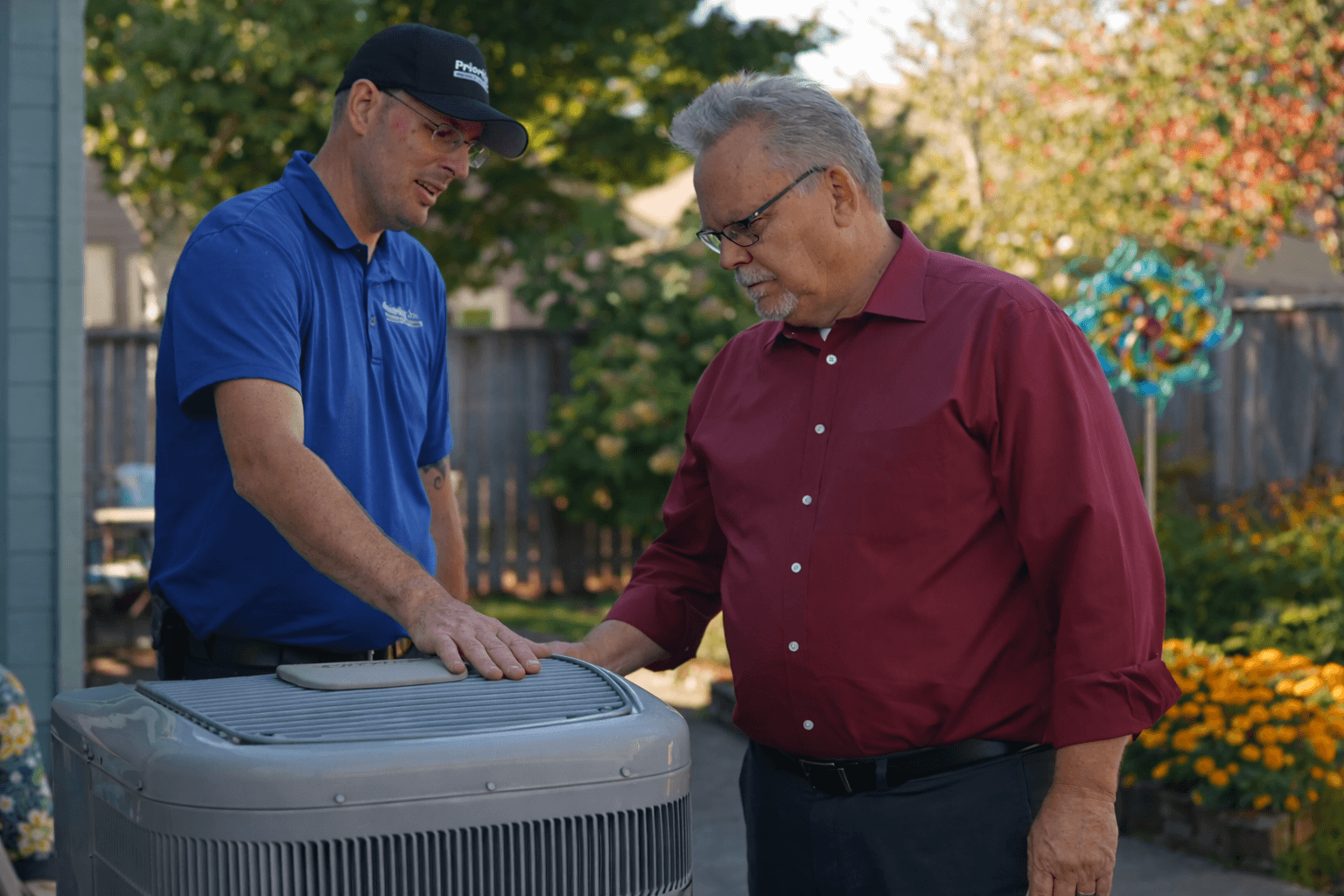
Unexpected AC breakdowns can leave you overheated during the most intense months of the summer. Whether you need help with a compressor problem or condenser fan motor troubleshooting, it helps to have an experienced heating, ventilation, and air conditioning (HVAC) team on your side. With the help of Priority One Heating & Air Conditioning, you can get professional diagnostics and 24/7 emergency support when disaster strikes.
What Does an AC Compressor Do?
To understand why your AC compressor is not working, it first helps to understand the role it plays in your air conditioner.
Why the Compressor Is Important
When refrigerant reaches your compressor, it is in a gaseous form. The AC compressor is responsible for pressurizing this low-pressure gas and turning it into a high-pressure gas so that it can release heat. By helping refrigerants transfer heat, your compressor helps your home stay cool in the summer.
Why It’s Called the “Heart” of the AC System
The compressor is often called the heart of the AC system because it circulates refrigerant throughout the unit.
Signs the Compressor May Be Failing
Odd noises, warm air, inexplicably high energy bills, and difficulties starting are all signs that your compressor may be starting to fail.
Signs Your AC Compressor May Not Be Working
The following are some of the most common indications that a compressor might not be working correctly.
Your AC Is Blowing Warm Air
An AC blowing warm air can occur when the refrigerant is low or the compressor isn’t working to circulate it properly.
The Outdoor Unit Won’t Turn On
Startup problems can stem from the compressor or electrical components.
Strange Noises Coming From the Outdoor Unit
Grinding, clicking, buzzing, rattling, screeching, and humming sounds can occur when the compressor is starting to fail. In particular, grinding and screeching noises strongly suggest the compressor is malfunctioning.
Circuit Breaker Keeps Tripping
When the electrical circuit is overloaded by a strained compressor, you’ll frequently notice tripped breakers.
Weak Cooling Performance
Poor cooling performance is one of the most common bad AC compressor symptoms.
Vibrating or Shaking Outdoor Unit
Issues with the compressor’s mounting or loose components can cause the unit to vibrate.
Higher Than Normal Energy Bills
As your compressor’s performance declines, it will have to work longer to maintain your temperature. Over time, this results in higher energy bills.
Common Causes of AC Compressor Problems
So, why is my AC compressor not turning on? And is it possible to troubleshoot common air conditioner compressor problems?
While each situation is different, there are a few common reasons why compressors malfunction. Although many of these problems must be repaired by a professional, certain issues can be tackled on your own.
Dirty Condenser Coils
When the condenser coils are dirty, it can restrict airflow and cause the unit to overheat. The extra workload and overheating can eventually cause the compressor to fail.
Low Refrigerant Levels or Refrigerant Leaks
Similarly, low refrigerant levels cause the compressor to run longer. Left untreated, this problem can damage your compressor.
Electrical Problems
If the capacitor, contactors, relays, or wiring start to fail, it can cause a hard start and result in motor damage.
Dirty Air Filters
A dirty air filter reduces airflow in your unit, forcing the compressor to work harder. If this problem isn’t fixed, it can eventually damage the compressor.
Overheating During Hot Weather
When hot weather arrives in Eugene and Springfield, ACs work overtime. Intense use can cause more strain on the compressor than normal.
Lack of Preventive Maintenance
Preventive maintenance is key to spotting minor issues before they spiral into major problems. Plus, the cleaning, lubricating, and component tightening that occur during a tune-up can prevent repairs from becoming necessary.
Aging AC Systems
Eventually, an AC compressor can break down due to normal age-related wear.
AC Compressor Troubleshooting Steps Homeowners Can Try
If you’re experiencing problems, you can try the following AC compressor troubleshooting tips on your own.
Check Thermostat Settings
First, verify that the thermostat is set to “cool” mode and the right temperature.
Replace the Air Filter
By changing the air filter, you can improve airflow and prevent dirt buildup.
Inspect the Circuit Breaker
If your outdoor AC unit is not working, try resetting the circuit breaker once. However, you should call for help if this happens again because repeatedly tripped breakers indicate an underlying problem.
Clear Debris Around the Outdoor Unit
To achieve proper airflow, clear away a 2- to 3-foot space around your outdoor unit.
Listen for Unusual Noises
Immediately shut off your unit and call for help if you notice grinding or screeching noises. Additionally, note any sounds you hear because the noise type can help the HVAC technician diagnose the problem.
Look for Ice on Refrigerant Lines
If there is ice on the refrigerant lines, you likely have an issue with your refrigerant levels.
Reset the AC System
You can try resetting the AC system by shutting the AC off at the thermostat. Then, turn off the breaker connected to the AC. After a minute, turn the breaker on. Then, switch the AC on again.
Important Safety Warning
For the safety of your home and family, never attempt electrical or refrigerant-based repairs on your home.
When To Call an HVAC Professional
The following symptoms are signs that you need to schedule professional HVAC repairs in Springfield, OR.
The Compressor Will Not Start
Capacitor, contactor, and relay issues can contribute to this problem, so it’s important to get professional diagnostics.
Warm Air Continues After Troubleshooting
If the airflow is still warm after your compressor and condenser fan motor troubleshooting, there is an underlying problem that must be diagnosed.
Burning Smells or Electrical Odors
These smells indicate overheated electrical components, which are a major fire hazard.
Loud Grinding or Metal Sounds
These sounds mean that a catastrophic compressor failure is possible, so immediately shut off your system and call for help.
Repeated Breaker Trips
When breakers trip repeatedly, there is an underlying electrical hazard involved. For your safety, you should get this issue diagnosed promptly.
Refrigerant Leak Symptoms
Under federal regulations, the refrigerant in your system must be recharged by an EPA-certified technician.
Repair vs. Replace: What’s the Best Option?
As a homeowner, it can be difficult to decide when to replace and when to schedule an AC repair in Eugene, OR.
When Compressor Repair Makes Sense
Newer systems and minor component failures can be repaired. For example, we can quickly repair issues with the contactors, electrical wiring, the capacitor, and relays.
When Compressor Replacement Is Worth It
Internal components in the compressor are not replaceable, so the entire component must be replaced if the compressor itself is at fault.
When Full AC Replacement Is Smarter
Depending on the age of the machine and the cost of repairs, getting an AC replacement may be the best choice. If your unit uses R-22 refrigerant, a replacement is also a good idea because this refrigerant type has been phased out.
Average Compressor Replacement Costs
The total compressor repair cost depends on the type of repair or replacement needed. For a compressor replacement, the cost is generally between a few hundred dollars and a couple of thousand dollars. However, repairing an external component is often much less. For instance, a capacitor replacement typically costs between $200 to $400.
How To Prevent Future Compressor Problems
To avoid compressor malfunctions in the future, remember the following essential tips.
Schedule Annual AC Maintenance
Routine maintenance is the most important thing you can do to prevent and detect compressor issues.
Change Air Filters Regularly
To achieve proper airflow, replace the air filter every 30 to 90 days.
Keep the Outdoor Unit Clean
For better energy efficiency and airflow, maintain 2 to 3 feet of empty space around your outdoor unit.
Address Small AC Problems Early
When you delay repairs, it leads to worse, more expensive damage.
Install a Smart Thermostat
To reduce compressor strain and maximize your energy efficiency, consider installing a smart thermostat.
Why Eugene & Springfield Homeowners Trust Priority One Heating & Air Conditioning
Springfield and Eugene homeowners turn to Priority One for a few key reasons.
Experienced HVAC Repair Technicians
Our team has years of experience working in the local area, so we understand what Oregon homeowners need.
Fast Response Times
Through our 24/7 emergency repairs, you can get fast support when a breakdown occurs.
Honest Repair Recommendations
Our team is committed to transparent pricing and upfront estimates. From customer education to satisfaction guarantees, we strive to deliver a high level of service.
Serving Eugene, Springfield, & Surrounding Areas
We’re locally based, so we understand our region’s climate and HVAC needs.
Schedule AC Repair in Eugene & Springfield Today
If you need help with your compressor or condenser fan motor troubleshooting, our team can help. We offer fast cooling repairs and emergency diagnostics, so you can quickly discover the reason why your AC compressor is not working and get it fixed.
Get fast compressor diagnostics today.
Frequently Asked Questions About AC Compressors
Why is my AC compressor not turning on?
When an AC compressor is not kicking on, it’s likely because it isn’t receiving the electricity it needs to start. This may be due to a faulty capacitor, broken contactor, or tripped breaker.
What are the signs of a bad AC compressor?
If your AC compressor is not working, you may notice warm air, grinding noises, vibrations, frequently tripped breakers, or poor performance. Additionally, the compressor may fail to turn on.
Can a bad compressor be repaired?
A compressor is a sealed unit, so internal issues can’t be repaired easily. If the problem is due to the capacitor, relay, contactors, or a similar external component, the problem can be repaired. In most cases, a bad compressor will need to be replaced with a new one.
Should I replace my AC if the compressor fails?
It depends. New ACs and units that have required minimal repairs in the past will likely last years longer if they are replaced. For a general guideline, multiply the cost of repairs by the age of the unit. If the result is higher than $5,000, a complete AC replacement is likely the best option.
What causes an AC compressor to stop working?
An AC compressor can stop working because of age, low refrigerant levels, a faulty capacitor, dirty condenser coils, or any issue that causes added strain on the unit.
Service Request
Contact
"*" indicates required fields