Why Is My Furnace Sweating? Common Causes and Fixes
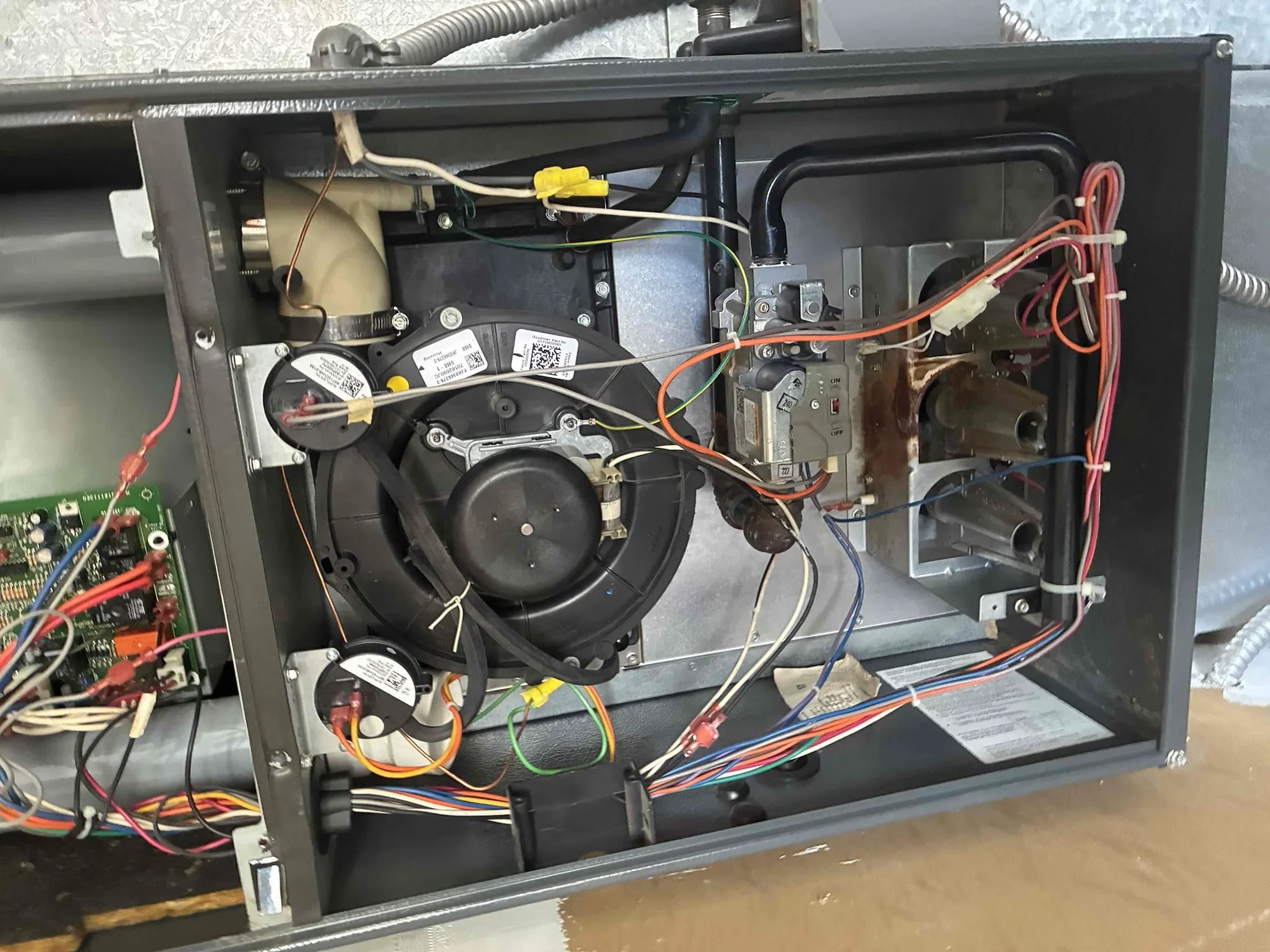
When a furnace is sweating, it may be due to a faulty condensate pump, clogged drain line, or other factors. To resolve this issue, you have to find and fix the underlying cause. Priority One Heating & Air Conditioning can help with complex diagnostics and heating, ventilation, and air conditioning (HVAC) repairs. Why is my furnace sweating? And how can I fix it? To learn more about common causes and troubleshooting tips, read on.
What Does It Mean When Your Furnace Is Sweating?
The main reason for sweating is furnace condensation. When humid air comes in contact with metal components, ducts, and cabinets that are below the air’s dew point, water vapor in the air condenses. Internal condensation is normal in high-efficiency furnaces during winter, but external sweating may indicate a problem.
Why Is My Furnace Sweating?
So, why is my furnace sweating? There are a few key factors and situations that increase the likelihood of condensation on a furnace.
- Temperature differences between the air and furnace surfaces
- High relative humidity (RH) indoors
- Condensation on cold ductwork
- Condensation due to high-efficiency condensing furnaces
- Venting or drainage issues
- Faulty condensate pumps
- Clogged condensate drain lines
- Water from nearby plumbing or HVAC equipment
Common Signs Your Furnace Has a Condensation or Moisture Problem
Your furnace may have a moisture problem if you notice any of the following symptoms.
- Wet or damp ductwork
- Water on the furnace cabinet
- Unexpected furnace shutdowns
- Water stains
- Corrosion on the equipment
- Water pooling near your furnace
- Moisture around the furnace connections
- Musty odors
- Condensate pump running non-stop
- Recurring moisture after you clean up the water
Common Causes of Furnace Sweating and Condensation
There are a few common issues that can result in a furnace sweating or developing condensation.
High Humidity Around the Furnace
When the RH is high, water vapor condenses onto the furnace as soon as the surface is cool enough. This is especially common in basements, crawlspaces, and utility rooms. By removing the moisture source and properly ventilating the space, you can prevent this issue.
Temperature Differences Between Air and Furnace Surfaces
Furnace condensation problems can occur if the surface temperature drops below the dew point. This is the main cause of ductwork sweating.
High-Efficiency Furnace Condensation
High-efficiency furnaces can experience condensation because the secondary heat exchangers cause a drop in temperature, causing water vapor to condense. The resulting liquid is drained from the furnace through a condensate drain line.
Sweating and liquid draining through the tube is normal. If there is water around the furnace, there may be a leaky drain line or clogged drain.
Understanding how high-efficiency furnaces operate can help homeowners distinguish normal condensation from potential problems. Learn more about our furnace services in Eugene and Springfield.
Clogged Furnace Condensate Drain Line
The drain line is responsible for removing the water produced by a high-efficiency furnace. If the furnace’s condensate drain is clogged or the drain line is blocked, water can overflow. This can trigger a safety shutdown, causing the entire unit to stop running.
Faulty Condensate Pump
In basements, utility closets, and lower floors, condensate pumps are often needed when gravity drainage is not possible. A float switch activates the pump when the reservoir reaches a certain level. Some systems also have an overflow safety switch that shuts down the furnace if the water level becomes too high.
Furnace Venting Problems
Condensing furnaces have vent systems that can handle moisture. If the vent slope is wrong or drainage is blocked, liquid may move in the wrong direction.
Condensation From Nearby HVAC Equipment
Other HVAC equipment can also result in water accumulation. Moisture normally condenses on the evaporator coil because of how cold it gets. This moisture is diverted away from the unit using the condensate drainage system. If excess moisture accumulates or the drainage system is blocked, you may notice water buildup in other areas. You’ll be able to tell whether the AC is the issue by seeing if your unit is in heating or cooling mode when the water accumulates.
Furnace Sweating vs. Furnace Leaking Water: What’s the Difference?
While they may both involve moisture, a furnace leaking water and a furnace sweating are not the same problem. To help you determine the cause of the moisture, we’ve broken down key differences between both types of furnace-related moisture.
Furnace Sweating | Furnace Leaking Water | |
Appearance | Light moisture on the furnace’s exterior surfaces | Dripping water or pooling around the furnace |
Normal Location | On metal surfaces, pipes, and ductwork | Around the base of the furnace, nearby piping, or drain connections |
When It Occurs | When humid air contacts a surface whose temperature is below the air’s dew point | When there is a drainage issue |
Common Causes | Condensation due to the humidity present and the air temperature | Damaged drain lines, clogged drains, or other furnace issues |
Possible Fixes | Improve airflow, upgrade insulation, or reduce your home’s RH. | Repair damaged connections, clear blocked drains or lines, or replace malfunctioning components |
When to Call a Professional | If the moisture continues, causes rust, or is near electrical components | If water collects around the furnace, continues to leak, or comes from an unknown source |
Is Furnace Sweating Normal or a Sign of a Problem?
While condensation is a normal part of a high-efficiency furnace operation, it should always be contained within the designed drainage system. If water occurs on exterior surfaces or pools around the furnace, there is an underlying issue that needs to be investigated. At Priority One, our team can quickly diagnose and repair the cause of your furnace moisture problems.
Safe Troubleshooting Steps Homeowners Can Try
Before you reach out for furnace repairs in Eugene, OR, there are a few basic troubleshooting tips you can try on your own.
- Shut off the system.
- Identify the source by finding where the leak is coming from, as long as it is safe to do so.
- Flush the drain line.
- Check the condensate drain pump. Note whether the reservoir is full or overflowing.
- Replace the air filter.
- Call for help if the moisture issue remains.
Important Safety Note: Do not attempt to fix any components or electrical equipment that are in standing water. If you smell gas, you should immediately evacuate the area before calling 911 or the utility provider. Never restart a furnace that has venting or combustion safety issues. Additionally, do not open combustion compartments, bypass safety switches, disconnect vent pipes, modify electrical components, or handle gas connections.
How Do HVAC Technicians Fix Furnace Condensation Problems?
Whether you’re struggling with a high RH or a furnace condensate pump not working, we can help. Our team will perform the following steps to diagnose and repair your furnace condensation issues.
Condensate Drain Cleaning and Repair
An HVAC technician will inspect the drainage connections, identify clogs, and clear blockages.
Condensate Pump Repair or Replacement
We will test your pump operation, check float switches, and inspect your discharge tubing. As necessary, we’ll replace faulty components.
Furnace Venting Inspection
Our team will check for furnace vent pipe condensation. We will note the condition of the pipe, its slope, drainage, connection quality, and the presence of obstructions. Then, we’ll correct the venting issues.
Humidity and Airflow Evaluation
A technician will identify sources of humidity, insulation problems, and air leakage. Besides inspecting your ductwork, we will also recommend moisture-control improvements you can make.
When to Call an HVAC Professional
If you notice the following symptoms, you should reach out to an HVAC technician for professional help.
- Water keeps collecting under the furnace.
- The condensate drain seems to be blocked.
- Your furnace shuts down unexpectedly.
- There is corrosion or water damage present.
- The condensate pump won’t work.
- Condensation continues, even though you’ve addressed the major sources of humidity.
- There is water visible near electrical components.
- You notice combustion-related warning signs or an unusual odor.
Furnace Condensation Repair vs. Replacement: What Makes Sense?
When deciding whether to repair or replace your unit, it helps to consider the furnace’s age, overall condition, the cost of repairs, and warranty coverage. Condensation alone doesn’t automatically mean that a furnace replacement is necessary. It simply means that there is a problem that must be evaluated. As long as the furnace is in good shape and the repairs are relatively inexpensive, performing repairs is likely the best option.
If your furnace has extensive corrosion, significant heat exchanger damage, or repeated major failures, professional furnace installation and replacement may be worth considering.
How to Prevent Furnace Sweating and Moisture Problems
With routine furnace maintenance in Eugene, OR, you can prevent furnace sweating and moisture issues in the future. The following steps should be included as part of your ongoing preventative maintenance.
- Schedule a professional heating tune-up before the heating season to check condensate drainage, venting, and overall furnace operation.
- Have your condensate drains inspected and cleaned.
- Resolve water leaks promptly.
- Verify that the condensate pump is working properly.
- Maintain an appropriate RH indoors.
- Keep drainage paths clear.
- Have a technician inspect your venting system, duct insulation, and air leakage.
Why Furnace Moisture Problems Shouldn’t Be Ignored
When a moisture problem occurs, it can result in corrosion, water damage, and electrical component damage. In turn, this can cause unexpected furnace shutdowns, damage to nearby flooring, and mold growth. By getting moisture issues diagnosed right away, you can prevent more extensive damage.
Furnace Sweating and Condensation Problems in Eugene & Springfield Homes
In Eugene and Springfield’s cool, wet weather, indoor RH levels can increase. This is especially true in older homes that have unconditioned equipment spaces. By planning for seasonal heating and cooling transitions in Lane County, you can identify moisture sources, resolve water issues, and ensure efficient condensate drainage.
Why Homeowners in Eugene & Springfield Choose Priority One Heating & Air Conditioning
At Priority One Heating & Air Conditioning, our local team members can help with all types of professional furnace troubleshooting and furnace repairs. Through our heating system diagnostics, we can quickly diagnose major furnace water leak causes. Then, we can recommend the best repair and maintenance services for your situation. Our team offers honest recommendations and prompt repair services throughout Eugene, Springfield, and the surrounding Lane County communities.
Frequently Asked Questions About Furnace Sweating
Why is my furnace sweating?
A high-efficiency furnace can sweat because the secondary heat exchanger removes heat, which causes the moisture to cool and become a liquid.
Is it normal for a furnace to have condensation?
Some high-efficiency furnace condensation is normal internally. External sweating, pooling, and water leaking are not normal symptoms and should be addressed by a professional.
Why is my furnace sweating in winter?
Internal condensation can be normal in the winter if you have a high-efficiency furnace. This occurs as moisture cools and turns into a liquid. As long as there isn’t external sweating or excess water accumulation, it may not be an issue.
Why is there water underneath my furnace?
If there is water underneath the furnace, it may be due to a faulty condensate drain pump or damaged condensate drain line.
Can high humidity cause furnace sweating?
A furnace can sweat if the humidity level increases. This problem can be worsened if there is poor insulation around the unit or air leaks that allow humid air to enter.
Can a clogged condensate drain cause a furnace to leak water?
Absolutely. If the drain becomes clogged, water can overflow. When this happens, you may hear gurgling noises or notice water pooling around the base of the furnace.
Why does my high-efficiency furnace produce water?
Water forms when combustion exhaust gases cool below their dew point in the secondary heat exchanger, causing water vapor to condense into liquid.
Can furnace condensation damage the HVAC system?
It can if it leaks or backs up. Besides the normal corrosion that happens due to moisture, the chemicals in the condensation can be corrosive as well. This can damage the burners, blower motors, and wiring. It can also result in premature heat exchanger and control board failure.
Should I turn off my furnace if it’s leaking water?
Yes. Having a water leak near electrical components can pose an electrical safety hazard. At the very least, the water can damage the furnace components. Have your unit inspected before operating it again.
How much does it cost to fix furnace condensation problems?
The cost depends on the cause. For instance, a clogged condensate drain line is a relatively easy, inexpensive fix. Meanwhile, replacing the secondary heat exchanger or a cracked inducer motor assembly can be costly
Schedule Furnace Inspection and Repair Today
Why is my furnace sweating? Should I be concerned? If there is water or condensation around your furnace, Priority One Heating & Air Conditioning can help. Our experienced technicians can quickly identify the source of the moisture, so you can prevent additional equipment and property damage. Schedule your furnace diagnostics in Eugene and Springfield today.
Service Request
Contact
"*" indicates required fields